Daily acquisition brief // September 15, 2026

CMCoE Meme Intel: September 15, 2026

Three planning tells: FAA's 11,389 unintegrated schedules, a federal room-sharing list most sampled officials had not heard of, and an NIH sole-source case built around the only known required mouse colony.

3 storiesRSS feed
Program scheduling / air traffic control

FAA has 11,389 project schedules and no integrated master schedule for its accelerated ATC modernization.

GAO says the individual schedules are not integrated, so same-site installations are generally not optimized to reduce impacts on controller operations.
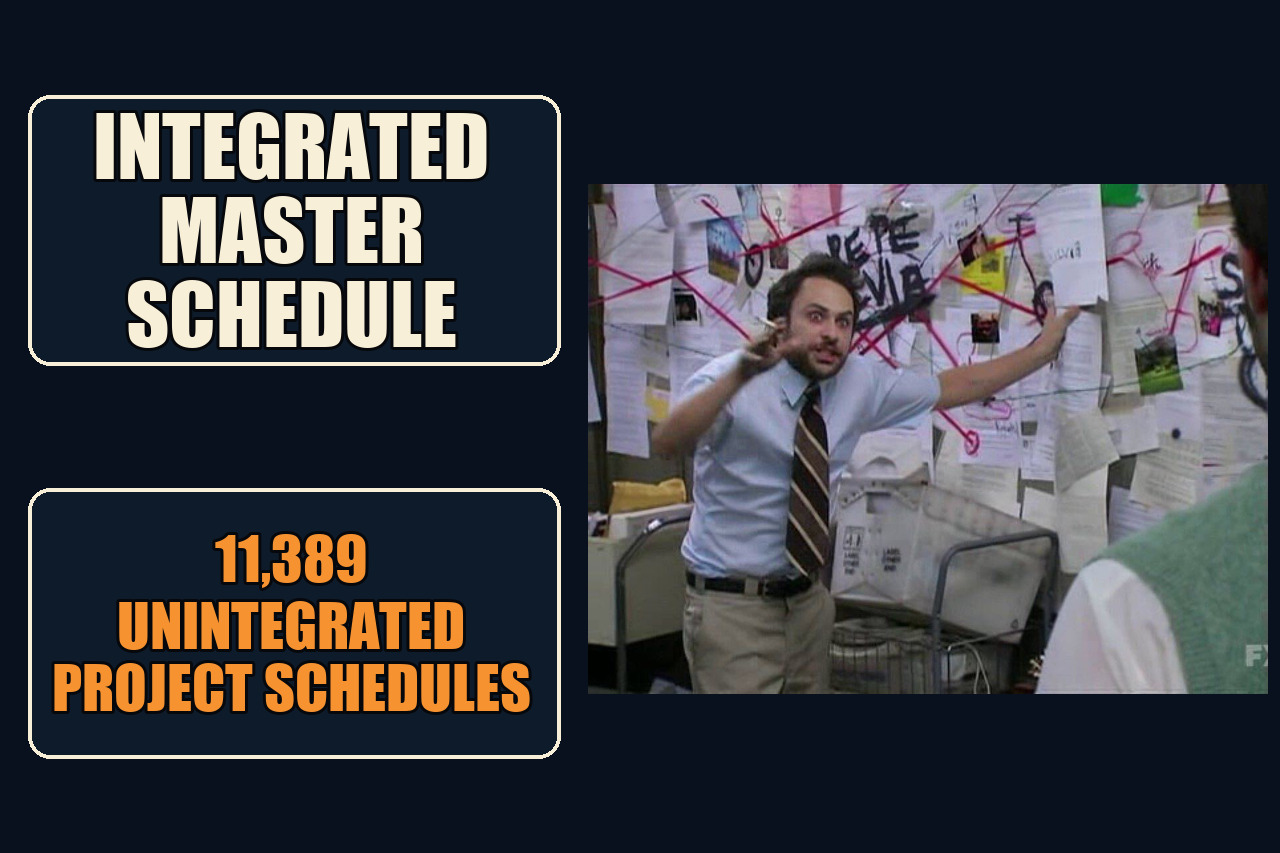
Chaos Planning reaction frame with the setup Integrated master schedule and the payoff 11,389 unintegrated project schedules.
Integrated master schedule. 11,389 unintegrated project schedules.

What happened

The Federal Aviation Administration's Brand New Air Traffic Control System initiative is intended to accelerate replacement of aging communication, surveillance, weather, and training systems. Phase one is planned for completion by December 2028, and Congress appropriated $12.5 billion in July 2025 to support the effort.

GAO reported on September 14 that FAA has not developed a comprehensive, well-documented lifecycle cost estimate or an integrated phase-one master schedule. Instead, FAA maintains 11,389 individual project schedules that are not integrated; GAO said installations at the same sites are therefore generally scheduled without optimizing the sequence to reduce controller impacts.

Why CMCoE cares

A modernization program this interdependent needs one view of sequencing, resource conflicts, site access, and operational impacts. Without it, speed at the project level can create collisions at the program level and increase the risk of disruption, delay, and cost growth.

Regulatory fine print

FAA does have individual project schedules, and GAO also documented progress such as replacing 2,560 of 5,170 old copper wires as of May 2026. The finding is that those schedules are not integrated into a master schedule; it is not a claim that the agency has no plans or has already caused a specific incident.

Sources

  1. GAO - Air Traffic Control Systems: Ambitious New Modernization Effort Needs to Improve Cost and Schedule Planning (U.S. Government Accountability Office, )
Federal real property / shared space

GSA has a meeting-room sharing list that most sampled agency officials did not know existed.

The voluntary inventory is also incomplete, and GSA said more reminder emails became undeliverable after federal turnover in 2025.

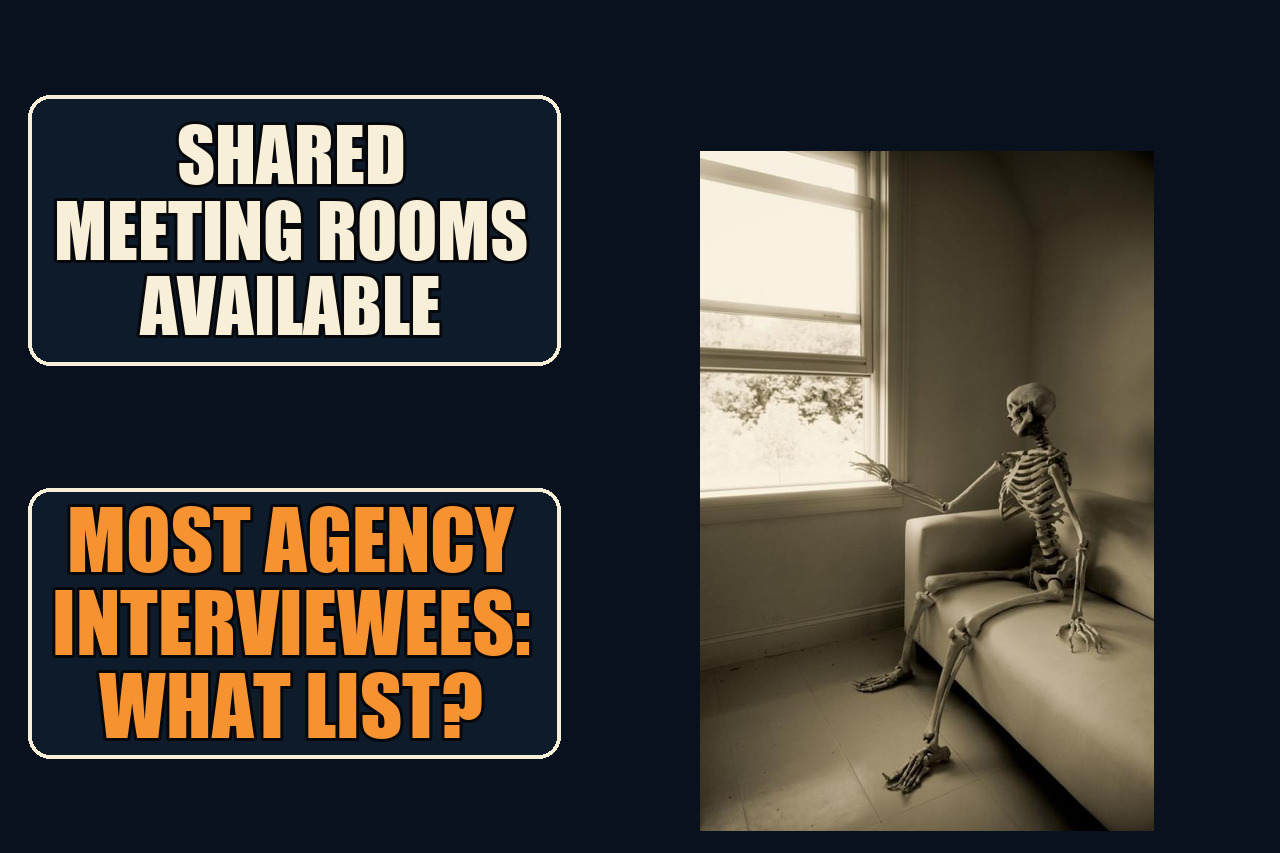
Skeleton Waiting reaction frame with the setup Shared meeting rooms available and the payoff Most agency interviewees: what list?
Shared meeting rooms available. Most agency interviewees: what list?

What happened

GSA publishes an online list of meeting rooms and other special-use spaces that federal tenant agencies volunteered to share. The list includes room descriptions and reservation contacts, and its purpose is to help agencies use existing federal space instead of separately leasing or constructing comparable rooms.

GAO reported on September 14 that the list is not comprehensive and that most tenant-agency officials interviewed across six selected federal buildings were not aware of it. GSA said federal turnover in 2025 contributed to the problem because more of its reminder emails were undeliverable.

Why CMCoE cares

A shared-space inventory saves money only when agencies can discover and reserve what is already available. Weak coverage and weak awareness can leave usable rooms idle while organizations solve the same need through additional space and spending.

Regulatory fine print

GAO's interviews covered officials at six selected buildings and were not designed to estimate awareness across the entire federal workforce. The report identifies potential cost and utilization benefits; it does not quantify a specific lease or construction award caused by the list's limited reach.

Sources

  1. GAO - Federal Real Property: GSA Should Take Additional Steps to Improve Agencies' Awareness of Meeting Spaces List (U.S. Government Accountability Office, )

Sole source / preclinical research

NIH's sole-source rationale is an established knockout mouse colony.

The notice says UIC maintains the required EC-Cav1 knockout colony and that the model is not known to be maintained at another laboratory.

Is This a Pigeon reaction frame with the setup Only known required mouse colony and the payoff Is this a sole source?
Only known required mouse colony. Is this a sole source?

What happened

NIH posted a September 14 notice of intent for preclinical animal research on soluble adenylyl cyclase inhibition and pulmonary arterial hypertension. The work requires an established endothelial-cell-specific Cav1 knockout murine model and corresponding wild-type controls.

The notice says the University of Illinois Chicago currently maintains the required colony and that the model is not known to be maintained by another laboratory. NIH therefore intends to negotiate with UIC under FAR 13.106-1(b)(1), while allowing responsible sources that believe they can meet the requirement to submit capability information.

Why CMCoE cares

A unique living research input can narrow the practical source pool before ordinary price and technical comparisons begin. Recreating or transferring a specialized colony could add schedule, validation, animal-care, and scientific-continuity risk to the acquisition.

Regulatory fine print

The public notice describes the colony as the only one known to NIH, not as proof that no other capable source exists. This is a notice of intent rather than a request for competitive quotations, and the agency expressly permits capability submissions before making its final determination.

Sources

  1. SAM.gov - 75N98026R00085 soluble adenylyl cyclase inhibition research notice (SAM.gov, )
  2. Federal Contract Finder - indexed notice text and publication metadata (Federal Contract Finder, )