Daily acquisition brief // October 16, 2026

CMCoE Meme Intel: Incumbent Preservation Algorithm

A late AI requirement, ten billion in disputed cost avoidance, and a SharePoint migration that needs archaeology.

6 storiesRSS feed
HHS / AI / Competition

176 firms answered. Then the requirement added AI.

HHS's website market survey drew 176 responses before a mandatory chatbot changed the buying requirement.

Futurama Fry meme: NOT SURE IF AI REQUIREMENT / OR INCUMBENT PRESERVATION ALGORITHM
NOT SURE IF AI REQUIREMENT / OR INCUMBENT PRESERVATION ALGORITHM

What happened

An October 14 sole-source notice covers a September 30 award to RIVA Solutions for the Office on Women's Health. Its September 27 justification says March market research drew 176 responses, including 157 small businesses, for an earlier website-focused requirement.

HHS subsequently added a mandatory AI chatbot. A supplemental review found no alternative demonstrating all required website, AI, security and deployment capabilities within the required timetable. The agency selected the incumbent.

Why CMCoE cares

A broad response to an earlier scope can coexist with a one-source decision after requirements change. The revised scope and readiness test determine who can actually compete.

Regulatory fine print

This is HHS's justification, not a finding of unlawful favoritism. The 176 respondents were not all established as qualified for the final requirement. HHS cites UWP Moderate security, access and AI-ingestion dependencies, including a seven-week onboarding lead time, and says incumbency alone was not the basis. It plans to reassess market readiness before exercising the option.

Sources

  1. HHS: notice 7571MN26F80158 and September 27 sole-source justification (HHS / SAM.gov, )

DHS / Court of Federal Claims / Cost avoidance

The court upheld the cancellation. It did not certify $10 billion in savings.

A newly public FirstSource III opinion separates a lawful procurement cancellation from a contested cost-avoidance claim.

Roll Safe meme: BUY THE SAME IT ELSEWHERE / CALL THE OLD CEILING COST AVOIDANCE
BUY THE SAME IT ELSEWHERE / CALL THE OLD CEILING COST AVOIDANCE

What happened

The September 30 Westwind opinion, publicly reissued October 13, upheld DHS's cancellation of FirstSource III. The court found a rational basis in consolidating redundant IT purchasing through existing government-wide vehicles.

The opinion also describes officials counting the vehicle's full $10 billion ceiling as potential cost avoidance. Plaintiffs disputed that claim because the department still needed the IT. The court did not resolve that dispute: the contracting officer had not relied on the savings claim.

Why CMCoE cares

Ending a contract vehicle does not automatically eliminate the spending that would have flowed through it.

Regulatory fine print

A ceiling is buying capacity, not money already spent. GAO's September 3 report separately found that DHS's projected avoidance would not fully materialize, including because requirements were met through other contracts. DHS provided technical comments to GAO. The court denied the plaintiffs' requested relief; this is not a ruling that the cancellation was improper.

Sources

  1. Court of Federal Claims: Westwind Partners, No. 24-1504C, public opinion (U.S. Court of Federal Claims, )
  2. GAO-26-109096: DHS contract cost avoidance (GAO, )
DHS / HSIN / Modernization extension

The SharePoint migration needed knowledge its original developers had taken with them.

A newly posted DHS justification describes 15-to-20-year-old communities that had evolved into hard-to-reconstruct applications.

Ancient Aliens meme: SHAREPOINT MODERNIZATION / NOW HIRING ARCHAEOLOGISTS
SHAREPOINT MODERNIZATION / NOW HIRING ARCHAEOLOGISTS

What happened

An October 15 notice publishes a justification for a three-month HSIN modernization extension. DHS says many old SharePoint communities had become small applications, with original developers often unavailable to explain them.

The justification cites unexpected migration complexity and shutdown-related delays in requirements gathering and access. It says 22 full-time contractors were working across more than 1,400 communities and describes additional time needed to complete the bridge phase and transfer knowledge.

Why CMCoE cares

A legacy platform can retain institutional memory that a replacement contract cannot instantly recreate.

Regulatory fine print

The notice identifies a competitively awarded September 2026 successor operations-and-maintenance contract. This is not evidence of an endless sole-source arrangement. DHS argues the incumbent's knowledge and readiness make it the lowest-cost way to finish this work; the extension price is redacted. The meme's archaeologist vacancy is satire.

Sources

  1. DHS: 70RTAC24FR0000066_P00011, HSIN extension justification (DHS / SAM.gov, )
From the acquisition files / USAGM / Property decisions

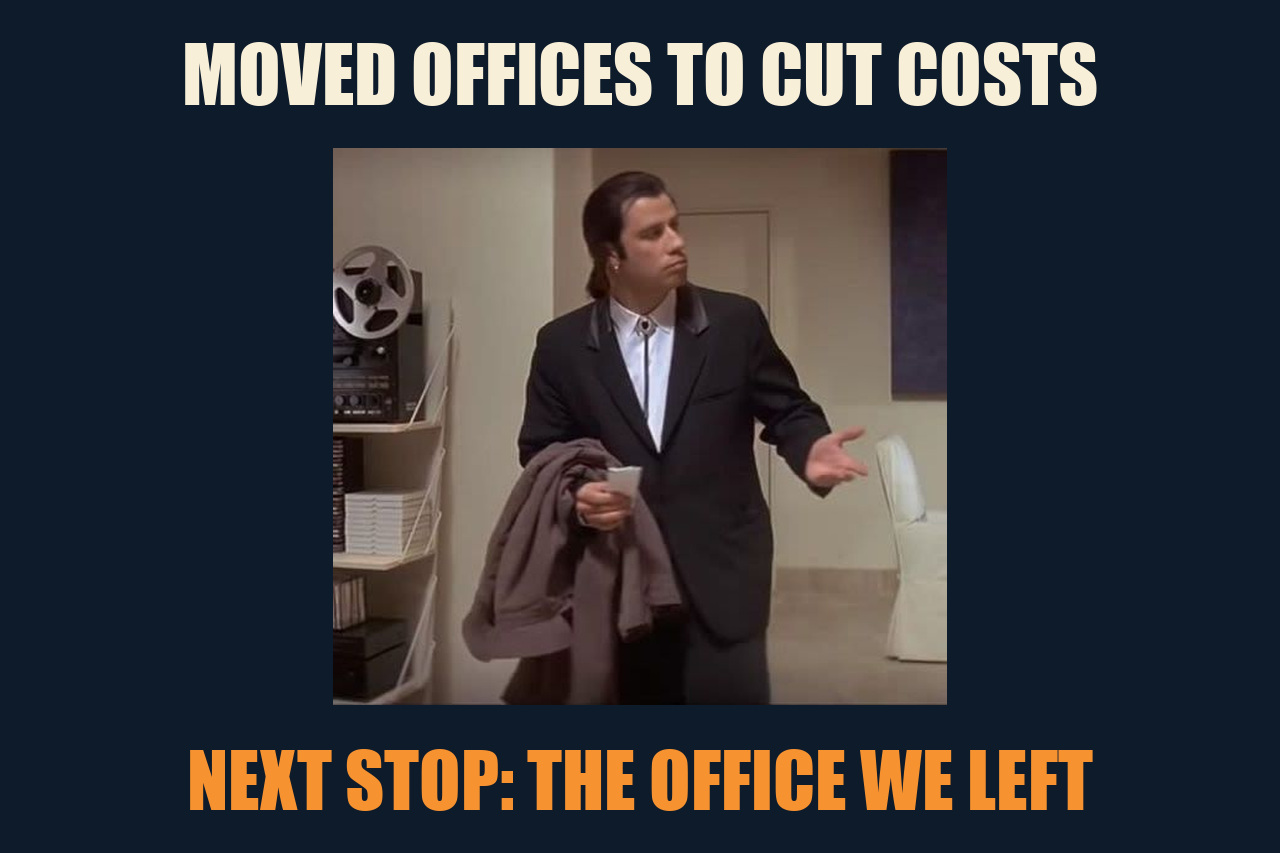
USAGM moved into an unsuitable building, then moved back.

A September inspector-general report describes a cost-cutting relocation that turned into a round trip.

Confused Travolta meme: MOVED OFFICES TO CUT COSTS / NEXT STOP: THE OFFICE WE LEFT
MOVED OFFICES TO CUT COSTS / NEXT STOP: THE OFFICE WE LEFT

What happened

State OIG's September 2026 evaluation says USAGM terminated a 15-year Washington office-and-broadcast lease, then moved into a NASA-occupied building despite warnings that it was unsuitable.

After spending resources on the move and discovering the new space did not meet its needs, USAGM relocated again to a building it had previously occupied. Inspectors used the sequence as an example of decisions made without adequate analysis of costs and benefits.

Why CMCoE cares

A cheaper-looking property decision can generate additional moves when operational suitability is assessed too late.

Regulatory fine print

From the acquisition files: this is a September report about earlier reduction actions, not an October relocation announcement. The prior building is not identified here as the same property whose lease was terminated. USAGM concurred with all six recommendations and reported implementation work under way. The current OIG page lists them open and resolved, meaning agreed action remains pending verification.

Sources

  1. State OIG: AUD-AFA-IB-26-25, relocation discussion on printed pages 12–13 (September report; accessed October 16) (Department of State OIG, )
  2. State OIG: report and current recommendation status (September report; accessed October 16) (Department of State OIG, )
From the acquisition files / Coast Guard / Sustainment

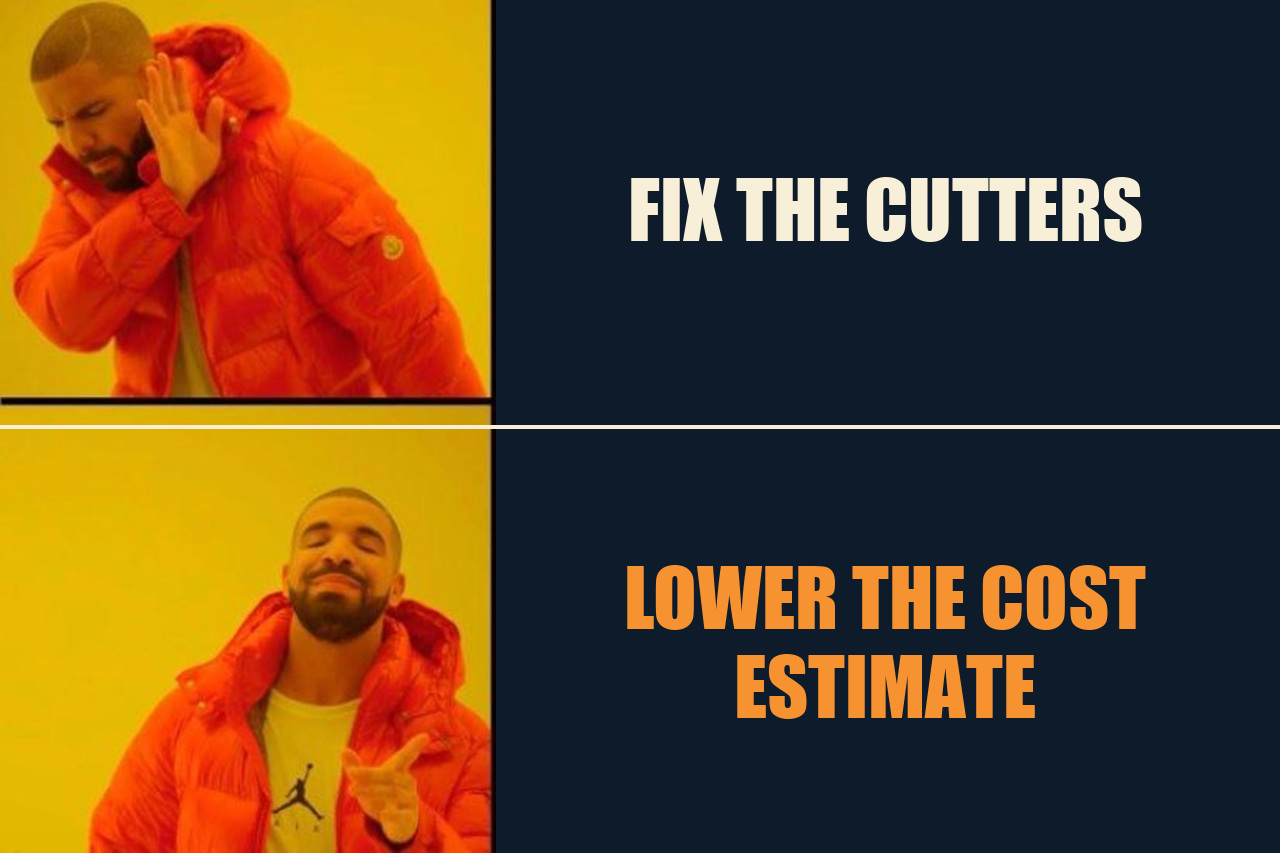
Cutter maintenance costs rose. The lifetime estimate went down.

Inspectors found that deferred maintenance helped make the Fast Response Cutter operating-cost estimate look smaller.

Drake Hotline Bling meme: FIX THE CUTTERS / LOWER THE COST ESTIMATE
FIX THE CUTTERS / LOWER THE COST ESTIMATE

What happened

DHS OIG's September 28 report says estimated Fast Response Cutter operations and support costs fell from $9.9 billion in 2021 to $9.2 billion in 2023 despite increasing costs. Deferred maintenance depressed the historical spending used in the estimate.

The 52 domestic cutters reviewed averaged 72 percent operational availability from fiscal 2023 through June 10, 2025, below the 85 percent target. The report identified maintenance backlogs and equipment deficiencies affecting readiness.

Why CMCoE cares

Work postponed today can make an estimate look cheaper while leaving the future maintenance requirement intact.

Regulatory fine print

From the acquisition files: these are historical estimates and an audited availability period, not today's fleet status. The Coast Guard concurred with all three recommendations and described a revised model incorporating deferred maintenance, funding efforts and equipment upgrades. OIG kept the funding-plan recommendation unresolved and the other two resolved but open; the public oversight record still lists three open recommendations. The finding does not establish intentional manipulation.

Sources

  1. DHS OIG: OIG-26-32, September 28 report and agency response (DHS OIG, )
  2. Oversight.gov: report and recommendation status (Oversight.gov, )
Army / Acquisition workforce / SMART

The contracting workforce pipeline starts before college and matures seven years later.

An Army contracting leader describes recruiting a high-school student for a long-term specialist pipeline.

Waiting Pablo Escobar meme: GROW YOUR OWN CONTRACTING SPECIALIST / WATER DAILY. HARVEST IN SEVEN YEARS.
GROW YOUR OWN CONTRACTING SPECIALIST / WATER DAILY. HARVEST IN SEVEN YEARS.

What happened

In an October 15 Army article, USACE Omaha deputy contracting chief John Hickman describes selecting a mathematics scholar through SMART. His planning horizon totals seven years: the final high-school year, four college years and two years of contracting development.

The student can contribute through summer internships before becoming a fully trained specialist. Hickman presents the approach as an addition to his existing two-year development pipeline, not a quick replacement for current vacancies.

Why CMCoE cares

Building scarce acquisition skills requires workforce decisions years before the eventual vacancy becomes urgent.

Regulatory fine print

This is one practitioner's described pathway, not a measured seven-year delay for every federal hire. SMART supports education and a service commitment; the author favors it despite coordination challenges. The clock includes time before full-time employment, and interns can do useful work earlier. No student likeness is used.

Sources

  1. Army AL&T: Hiring Contracting Specialists, the SMART Way, by John Hickman (U.S. Army Acquisition Support Center, )