Daily acquisition brief // October 24, 2026

CMCoE Meme Intel: Fixed It With Reply All

A pricing leak gets redistributed, a debriefing outlasts its deadline, a dashboard tells on its own design, and an AI prohibition has an exception process.

4 storiesRSS feed
Air Force / Procurement integrity

The Air Force answered a pricing leak by sending it to everybody.

GAO rejected the agency's assurance that sharing the same disclosure with all three bidders eliminated its competitive harm.

Roll Safe meme: LEAKED PRICES TO ONE BIDDER / FIXED IT WITH REPLY ALL
LEAKED PRICES TO ONE BIDDER / FIXED IT WITH REPLY ALL

What happened

An October 13 GAO decision, publicly released October 23, examines the Eglin Operation and Maintenance Services II competition. On September 30, 2025, the Air Force accidentally sent Reliance a slide containing all three offerors' evaluated cost roll-ups. Reliance reported it the next day and told its six recipients to delete it.

On October 3, 2025, the Air Force deliberately sent that slide to all three offerors to restore parity and avoid delaying the schedule. It allowed the information to be used in final proposal revisions. STS subsequently reduced its proposed cost by about $72 million; Reliance reduced its proposal by about $9 million.

Why CMCoE cares

Equal access to improperly disclosed pricing does not itself restore the competition that existed before the disclosure. GAO found the agency's no-harm conclusion unsupported: the slide revealed relative competitive positions and could help reverse-engineer pricing.

Regulatory fine print

GAO sustained this ground and denied Reliance's technical-evaluation challenges. It recommended a fresh impact assessment and appropriate mitigation, potentially using pre-disclosure proposals or canceling and resoliciting. It did not direct an award to Reliance. STS had planned categories of reductions before the disclosure; the record did not establish how much the disclosure affected the final reduction. This is a cost-reimbursement procurement, not proof of $72 million in savings or fraud. 'Reply all' is a satirical shorthand for redistribution, not a finding about which email button was used.

Sources

  1. Reliance Test & Technology: B-424203.3, B-424203.4; October 13 decision, public October 23 (Government Accountability Office, )
  2. Companion Fluor Federal Solutions decision: same disclosure and remedy (Government Accountability Office, )
Navy / Protest deadline

The Navy answered the bidder's questions. The protest clock had kept running.

A phase-one design-build debriefing did not qualify for the deadline exception, despite the contracting officer's references to debriefing rules.

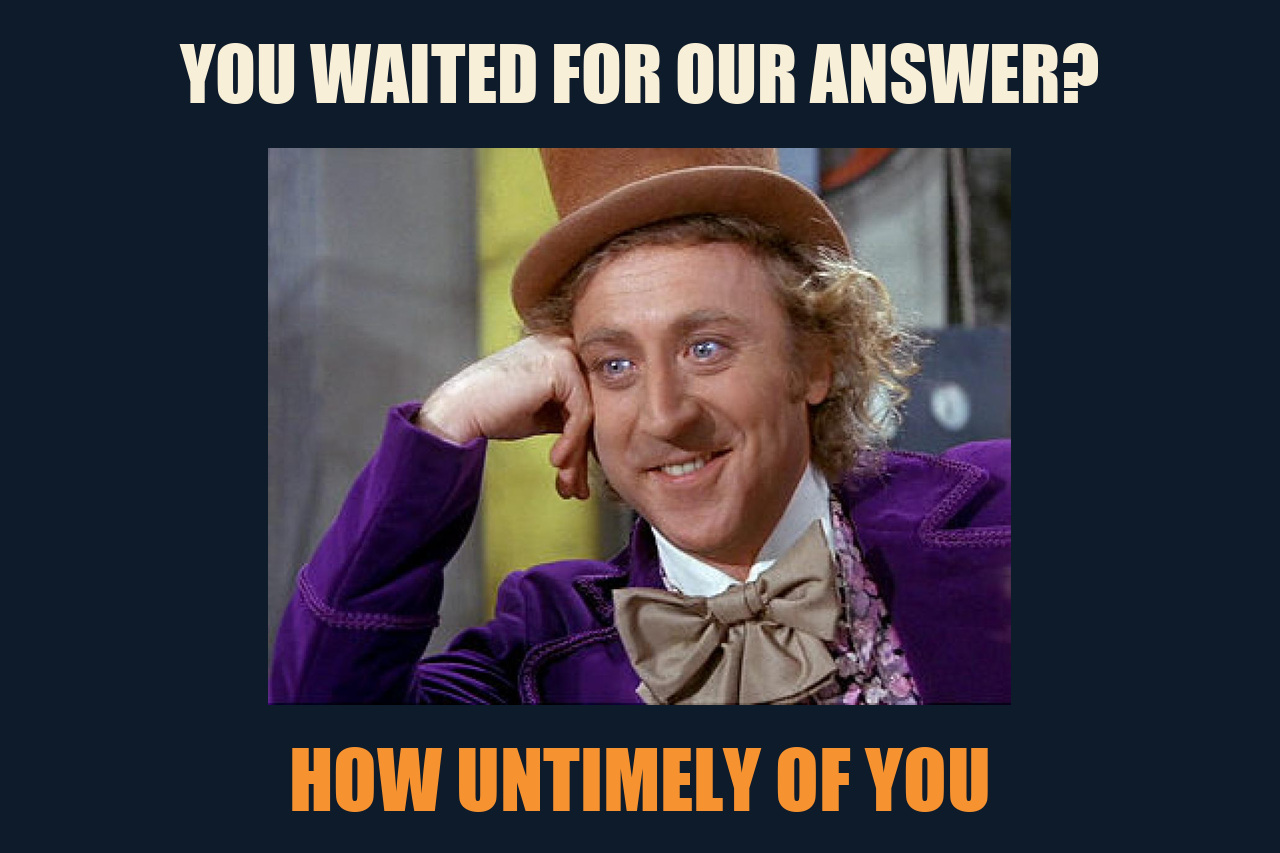
Condescending Wonka meme: YOU WAITED FOR OUR ANSWER? / HOW UNTIMELY OF YOU
YOU WAITED FOR OUR ANSWER? / HOW UNTIMELY OF YOU

What happened

GAO's October 19 Encon Desbuild JV4 decision, publicly released October 23, concerns a Navy two-phase design-build competition. The Navy gave the excluded firm its written explanation June 24. The firm asked follow-up questions June 26, received answers July 9 and protested July 20.

The Navy sought dismissal as untimely. GAO agreed: this phase-one debriefing was not legally required, so it did not trigger the exception that can delay the protest filing period. The firm's knowledge of the challenged evaluation on June 24 started the ordinary 10-day clock.

Why CMCoE cares

A contracting officer's description of a process cannot create a timeliness exception. Waiting for the agency to finish answering questions can leave a bidder with a complete explanation and an expired filing window.

Regulatory fine print

GAO dismissed the protest without deciding whether the underlying evaluation was correct. It did not find a deliberate trap. The firm relied on the contracting officer's FAR references; GAO explained why they did not control. The solicitation predated the cited Revolutionary FAR Overhaul provisions, and the renumbering did not change the result. The caption is invented satire, not a quotation from the Navy or GAO.

Sources

  1. Encon Desbuild JV4: B-423574.2; October 19 decision, public October 23 (Government Accountability Office, )
USCIS / Software demonstration

The cost dashboard worked. That was awkward for the software bid.

USCIS saw high operating costs in the bidder's own demonstration, and GAO upheld the resulting evaluation.

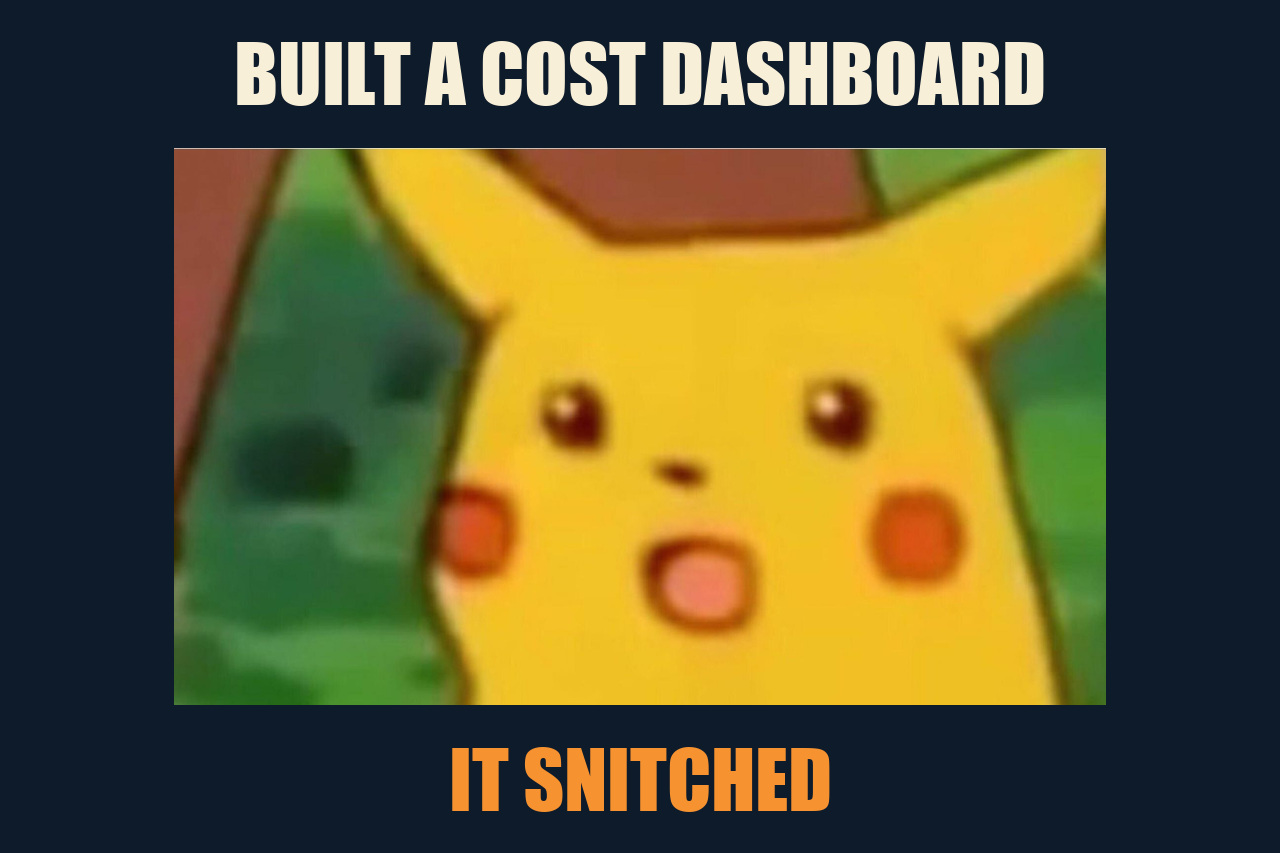
Surprised Pikachu meme: BUILT A COST DASHBOARD / IT SNITCHED
BUILT A COST DASHBOARD / IT SNITCHED

What happened

In its October 8 Octo Metric decision, publicly released October 23, GAO reviewed USCIS's PLANXS II software-platform procurement. The competition included a take-home technical challenge and a live demonstration. Evaluators found that Octo's cost-tracking dashboard showed an expensive operating design.

USCIS said the solution kept pipeline jobs running continuously and lacked cost-control mechanisms. Octo argued that its near-real-time data-sharing approach necessarily carried higher infrastructure costs. GAO found no basis to disturb the agency's judgment.

Why CMCoE cares

A dashboard can prove that a feature works while exposing why the whole approach is costly. Here, the visible operating model mattered alongside the demonstration's functionality.

Regulatory fine print

GAO denied the protest. Cost effectiveness was one of three challenged criticisms; incomplete deployment and program management also reduced agency confidence. The criticism concerned the design's costs, not punishment for honest reporting. This was an evaluated demonstration, not an audit of waste in a deployed government system. USCIS awarded the order to AEX, not Octo. 'It snitched' is satire about the dashboard, not an allegation of misconduct.

Sources

  1. Octo Metric: B-424623; October 8 decision, public October 23 (Government Accountability Office, )
From the acquisition files / DHS AI

DHS's AI prohibitions come with a waiver provision.

The September 3 directive lets the chief AI officer waive requirements, including prohibited uses, subject to coordination, documentation and binding legal limits.

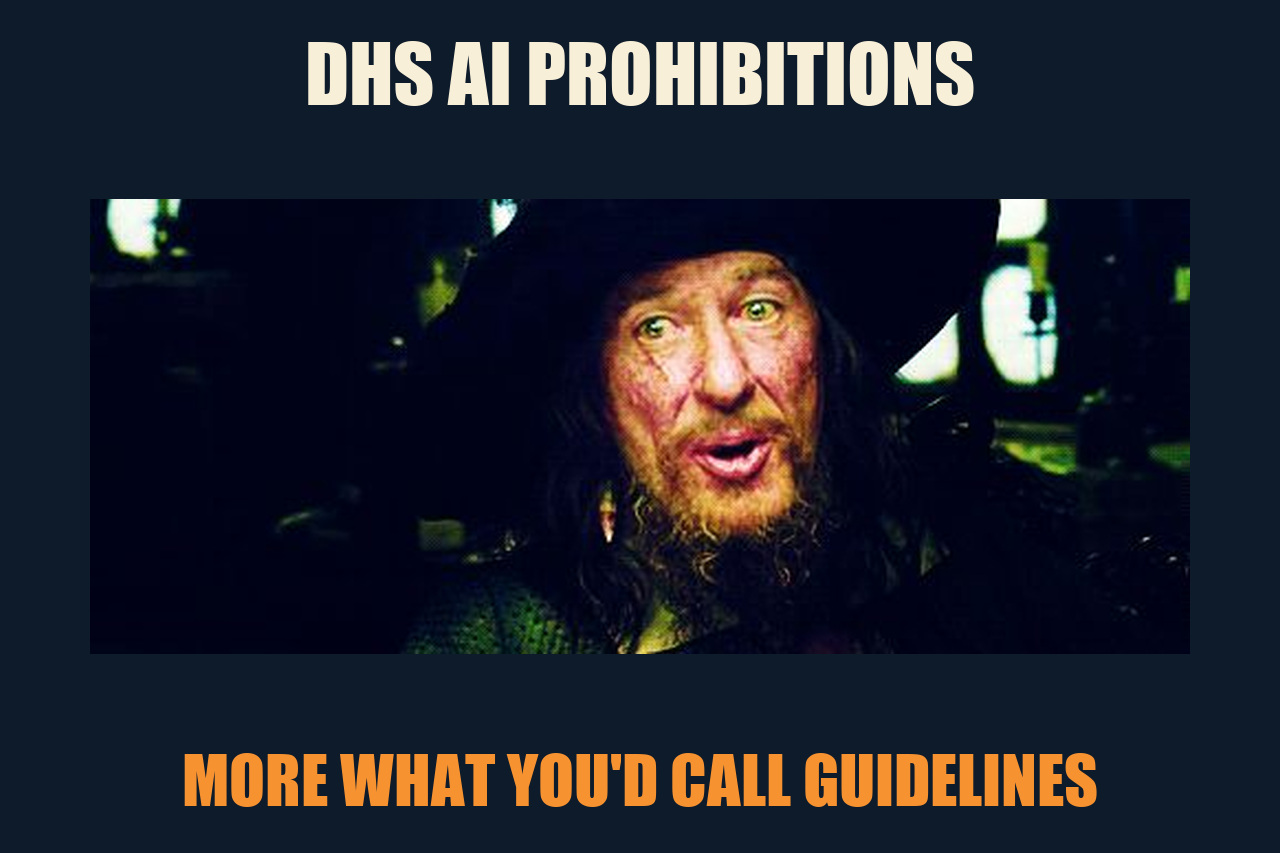
Barbossa Guidelines meme: DHS AI PROHIBITIONS / MORE WHAT YOU'D CALL GUIDELINES
DHS AI PROHIBITIONS / MORE WHAT YOU'D CALL GUIDELINES

What happened

DHS Directive 139-08-01, Revision 01, took effect September 3, 2026. Its official policy listing, updated October 20, identifies that revision. Section IV.B.6 authorizes the chief AI officer to waive any requirement of the directive and implementing policy, expressly including prohibited AI uses.

The directive also governs technical specifications for acquiring AI, including testing, risk, transparency and performance or data-ownership considerations. Its prohibitions include using AI as the sole basis for certain consequential decisions, such as arrests, searches or denying benefits.

Why CMCoE cares

For people specifying and buying AI systems, the distinction between a default prohibition and a conditionally waivable policy restriction matters. The same document sets the restriction and supplies an exception process.

Regulatory fine print

From the acquisition files: this is a standing-policy feature, not a new October 24 order. A waiver requires appropriate coordination with relevant officials, context-specific consideration and documented technical and operational reasons. It must remain consistent with law, regulation and government-wide policy; the chief AI officer cannot waive those external limits through this provision. No actual waiver was verified for this story. The directive does not replace DHS's underlying acquisition-management process. The pirate metaphor compresses a qualified waiver authority, not blanket permission to ignore safeguards.

Sources

  1. DHS Directive 139-08-01 Rev. 01: acquisition specifications IV.A.9 and waivers IV.B.6 (Department of Homeland Security, )
  2. Official policy directory: Revision 01 dated September 3; listing updated October 20 (Department of Homeland Security, )